For hospitals and clinics

Digital Biothesiometer X1, Digital Biothesiometer X2 and Neuroview™

Professional digital biothesiometers for accurate Vibration Perception Threshold (VPT) testing, combined with Neuroview™ documentation software for clinical screening, follow-up and reporting in diabetes, neurology, podiatry and sexual medicine.

This section is intended for healthcare professionals. Products must be used in accordance with the instructions for use.

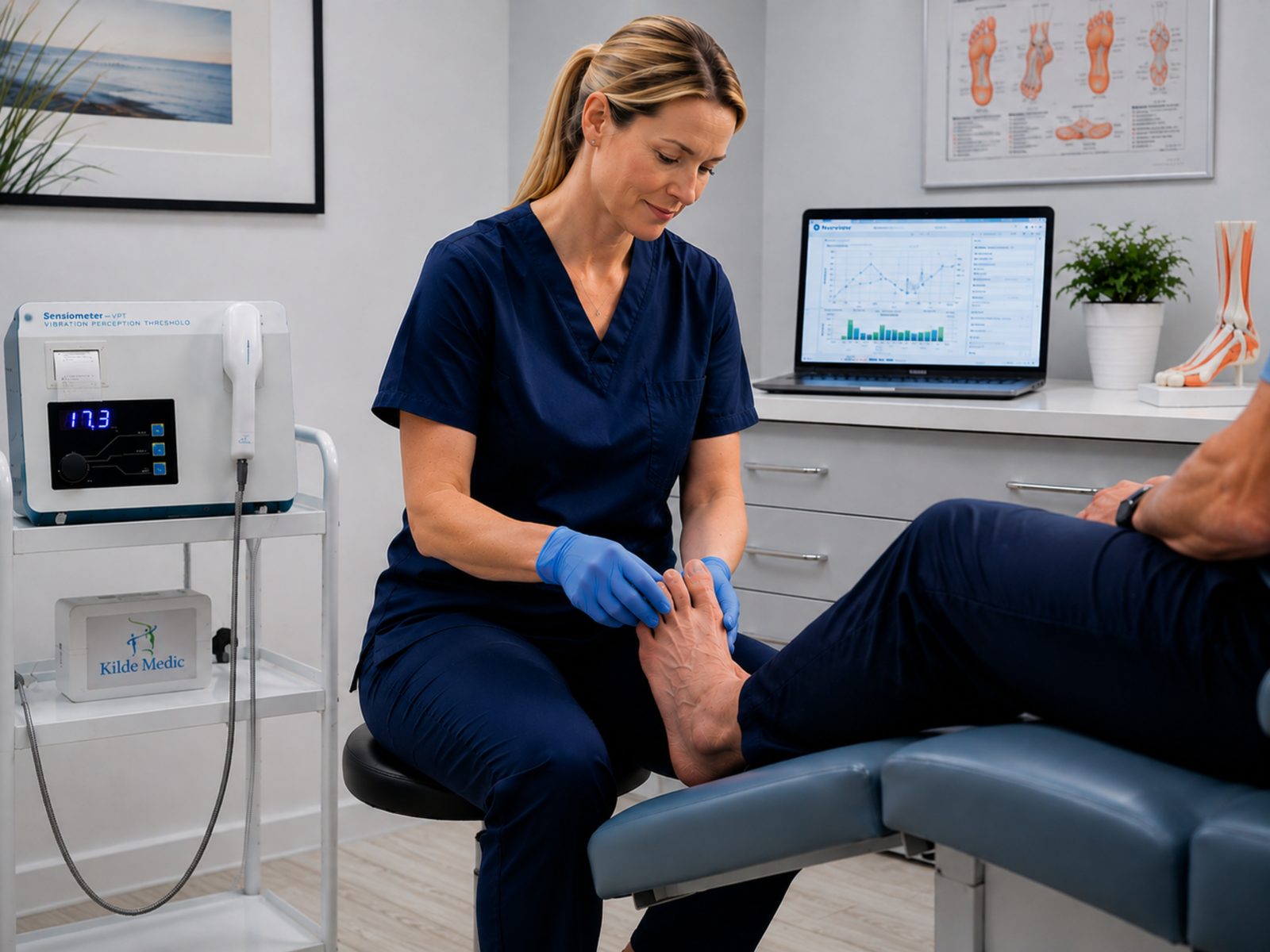
A clinician performing a vibration perception threshold test on a patient's foot

BTM® product family

The Digital Biothesiometer range — X1, X2 and Neuroview™

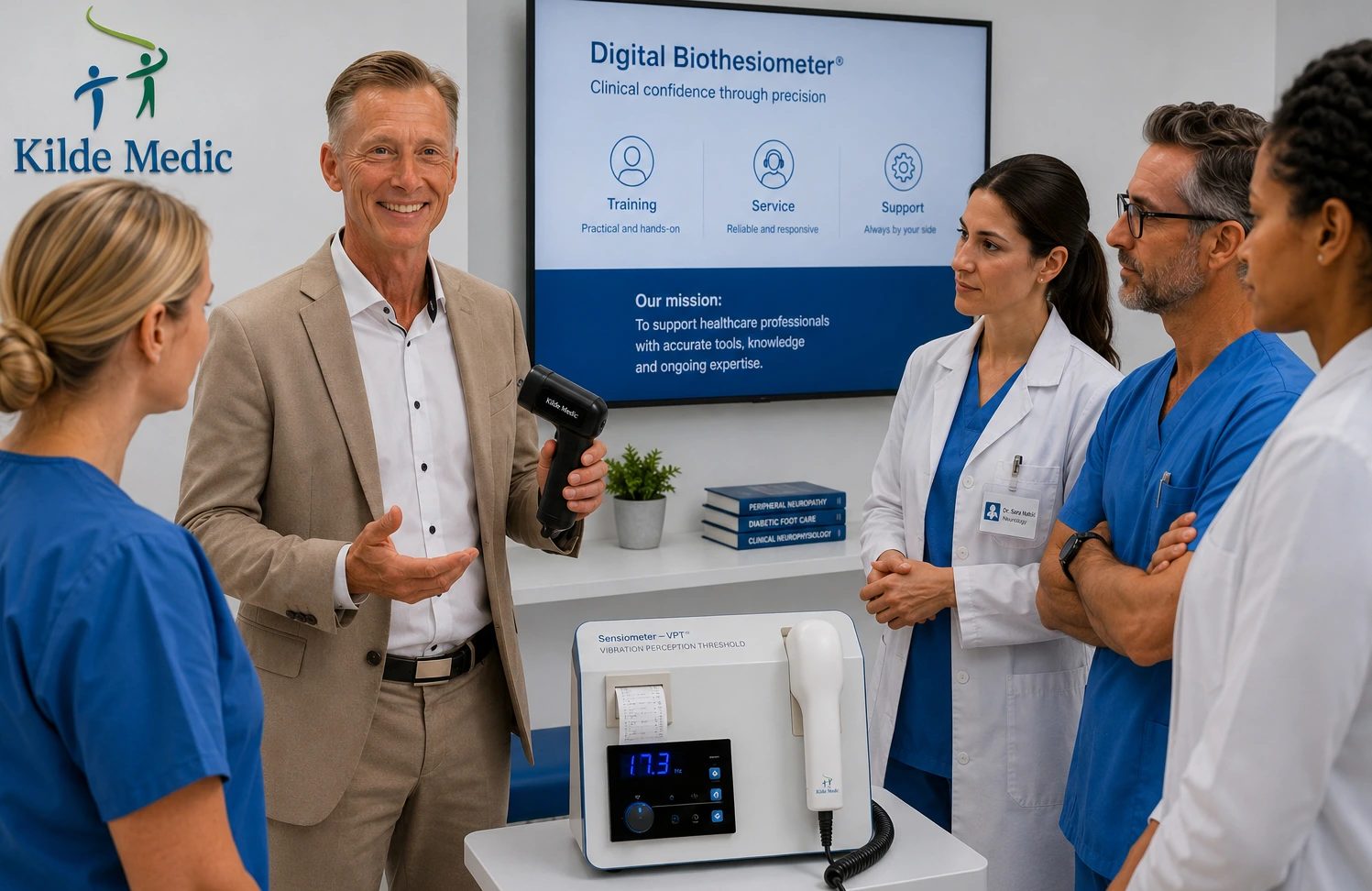
Two digital biothesiometers for accurate Vibration Perception Threshold (VPT) testing, with Neuroview™ documentation software for clinical screening, follow-up and reporting. The BTM® family from KildeMedic covers portable and desktop vibration testing for neuropathy screening in diabetes, neurology and podiatry.

Portable Digital Biothesiometer

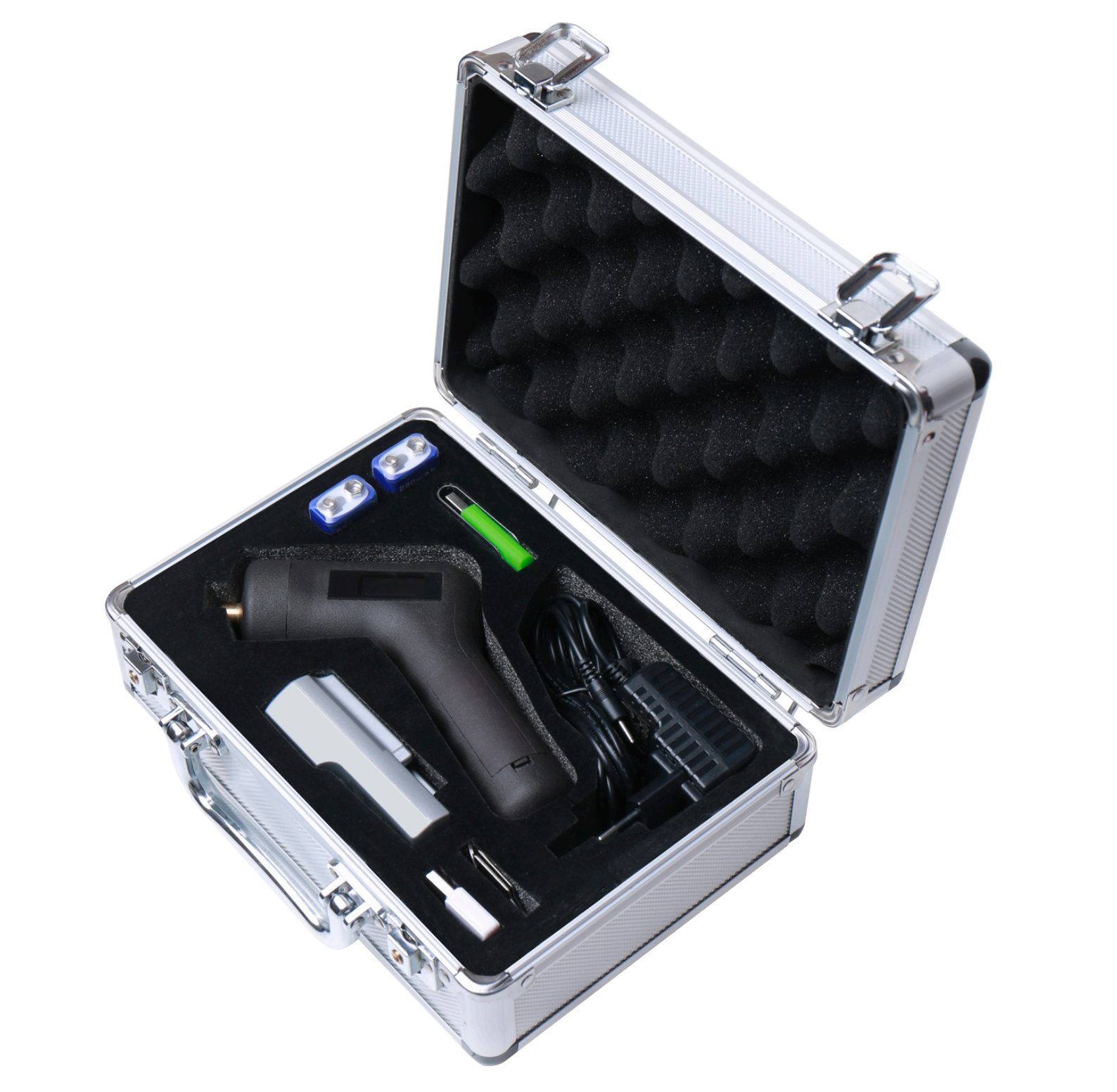
Digital Biothesiometer X1

BTM® X1

  • Digital VPT testing with the threshold read in volts across a 0–50 V range at 100 Hz
  • Includes a comprehensive library of predefined examination protocols, hands, feet, penile etc., Fully customizable test locations and user-defined protocols for specialized clinical applications.
  • Portable vibrometer for clinic rooms and outreach screening programmes
  • Power supply: 110–120 V AC / 220–240 V AC, 50/60 Hz — worldwide compatibility
View product

Desktop Digital Biothesiometer

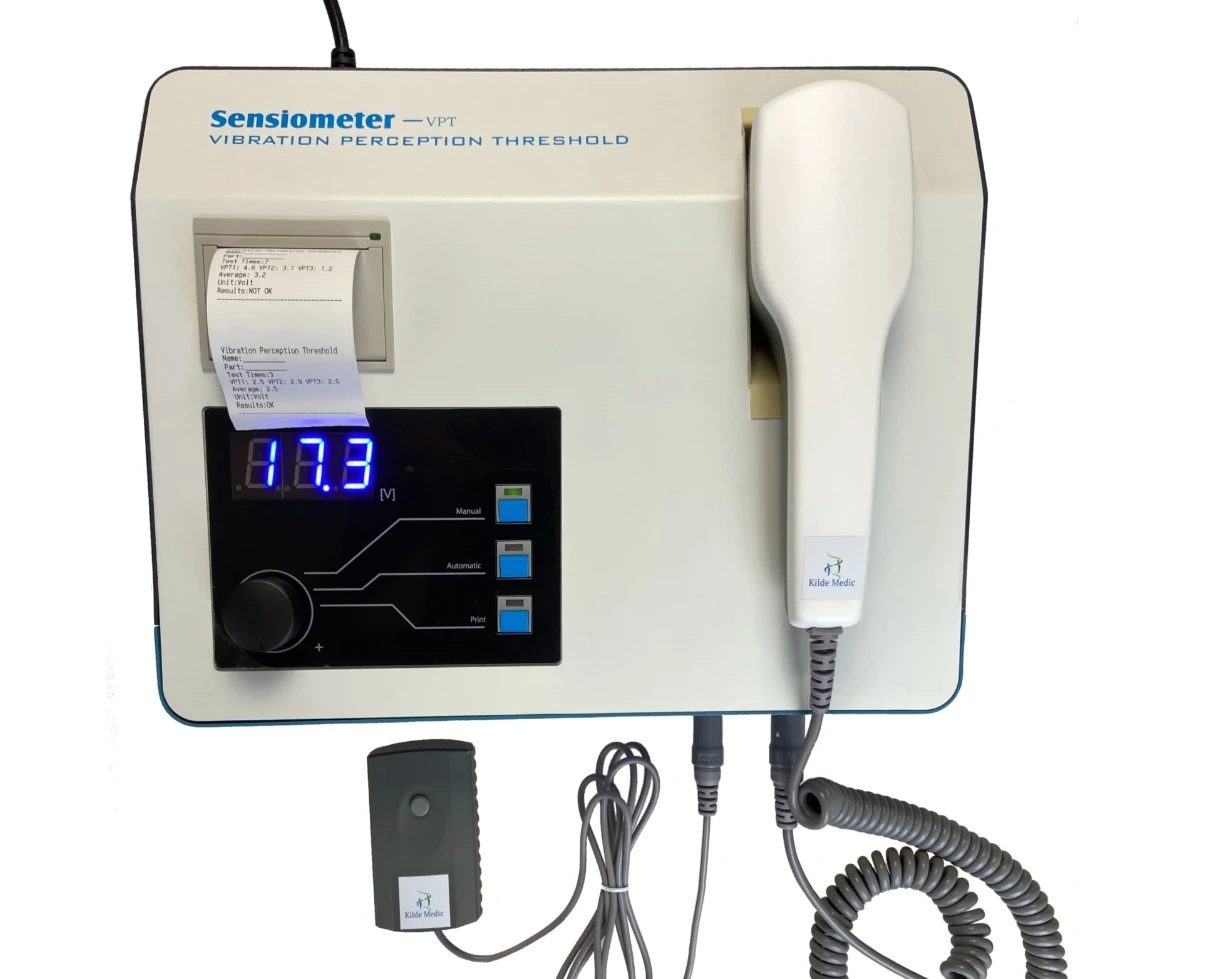
Digital Biothesiometer X2

BTM® X2

  • Desktop unit for fixed examination rooms and higher test volumes
  • Includes a comprehensive library of predefined examination protocols, hands, feet, penile etc., Fully customizable test locations and user-defined protocols for specialized clinical applications.
  • Same vibration testing method and readout logic as the X1 sensiometer
  • Power supply: 110–120 V AC / 220–240 V AC, 50/60 Hz — worldwide compatibility
View product

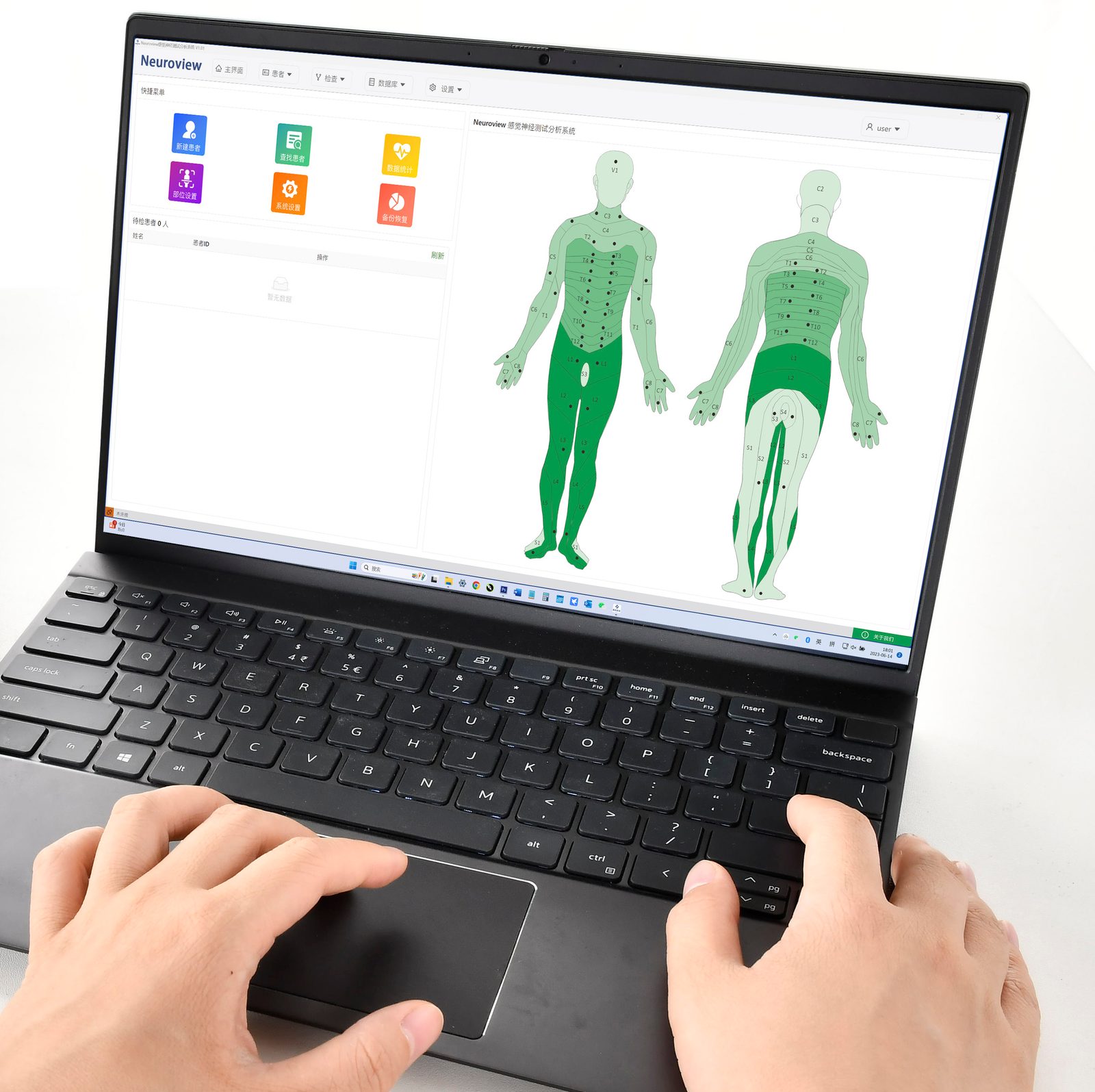
Clinical Documentation Software

Neuroview™

BTM® software

  • Records the measured vibration perception threshold per patient
  • Supports follow-up of VPT values over time with graphs and history
  • Built for hospital documentation workflows; export options confirmed at quotation
View product

Model availability, configurations and software integration options are confirmed on quotation.

Clinical application

Where biothesiometers are used

Digital Biothesiometers are used for vibration perception threshold (VPT) testing across hospital departments and specialist clinics. VPT testing gives a quantitative value for sensory assessment, recorded and followed over time in Neuroview™.

  • Diabetes Clinics

    VPT testing as part of routine foot screening and follow-up in patients with diabetes.

  • Neurology Departments

    Quantitative vibration perception testing in the assessment of peripheral nerve function.

  • Podiatry & Foot Clinics

    Sensory assessment of the foot in podiatry, diabetic foot care and wound care pathways.

  • Endocrinology Departments

    Vibration Perception Threshold testing alongside metabolic follow-up and patient monitoring.

  • Sexual Medicine & Sexual Health Clinics

    Quantitative vibration perception testing for sensory assessment in patients with premature ejaculation (PE) and other specialized sexual-medicine applications.

  • Hospitals & Specialist Clinics

    Shared use of a Digital Biothesiometer across departments, with documentation in Neuroview™.

  • Research & Clinical Studies

    Standardised VPT measurements for screening programmes, study protocols and data collection.

Application note

Premature Ejaculation (PE)

Digital Biothesiometers can be used for quantitative vibration perception testing as part of specialized sensory assessment in sexual medicine. In a sexual health clinic, the measured Vibration Perception Threshold provides an objective, repeatable value that can be documented and compared over time.

The Biothesiometer is a measuring instrument for vibration perception threshold testing. It does not diagnose or treat premature ejaculation. Use is at the discretion of the healthcare professional and in accordance with the instructions for use.

BTM® Biothesiometer

Technical overview

Intended useAssessment of vibration perception threshold (VPT) by healthcare professionals
MeasurementVibration perception threshold read as a value in volts, range 0–50 V
FrequencyDefined vibration frequency of 100 Hz
ApplicationIncludes a comprehensive library of predefined examination protocols, hands, feet, penile etc., Fully customizable test locations and user-defined protocols for specialized clinical applications.
ModelsDigital Biothesiometer X1 portable unit and Digital Biothesiometer X2 desktop unit (BTM® family)
Power supply — Digital Biothesiometer X1110–120 V AC / 220–240 V AC, 50/60 Hz — suitable for use in the USA, Canada, Europe, Australia and Asia
Power supply — Digital Biothesiometer X2110–120 V AC / 220–240 V AC, 50/60 Hz — suitable for use in the USA, Canada, Europe, Australia and Asia
SoftwareNeuroview™ documentation software; export options confirmed per model at quotation
ConnectivityBluetooth (X1) / USB (X2)
PrintingIntegrated printer on X2
DocumentationUser manual and technical data sheet supplied with the device
SupportDemonstration, training, service and technical support available

Documentation

  • User manual
  • Technical data sheet
  • Cleaning and maintenance guide

Documentation

Product documentation

Access current product documentation for KildeMedic Digital Biothesiometers. Instructions for Use and product information are available in multiple languages.

Instructions for Use

The current Instructions for Use for the Digital Biothesiometer X1 and X2, in the available languages.

Contact

Product Sheets

Product sheets with specifications and product information, in the available languages.

Contact

Documents open in a new tab and are kept in a shared folder, so the current version is always the one shown. Products must be used in accordance with the instructions for use.

Scientific literature

Clinical Research & Publications

Explore scientific publications and clinical research related to biothesiometry, Vibration Perception Threshold (VPT) testing and its clinical applications.

No publications have been approved for publication yet. New literature is reviewed before it appears here.

This is a scientific literature resource. A publication is only marked “KildeMedic product used in study” when this has been manually verified. All other publications are general scientific literature: they did not use or evaluate KildeMedic equipment and do not support or prove any KildeMedic product claim. Publications belong to their respective publishers and open at the original source.

Support

Procurement, training and service

Healthcare professionals reviewing clinical documentation together
  • Quotations and tender documentation for hospital procurement
  • On-site or online training for clinical staff
  • Service guidance and spare parts
  • Multilingual support across European markets

The information on this website is provided for general educational and product information purposes only. It is not intended as medical advice and does not replace consultation with a qualified healthcare professional.

Product detail

Digital Biothesiometer X1 and X2 in full

Measurement principle, specifications, handling and the documentation available for procurement. Each device has its own product page.

BiothesioMeter X1 vs X2

Same measurement principle. The choice is about where the testing happens.

BiothesioMeter X1 vs X2
X1 PortableX2 Stationary
FormatPortableStationary
MeasurementVibration perception thresholdVibration perception threshold
Range0–50 V0–50 V
Frequency100 Hz100 Hz
Best forWard rounds, outreach, multiple roomsA fixed examination room with daily use
Connection to PC / Neuroview™BluetoothUSB
PrinterIntegrated printer

BTM® · Item 81000

KildeMedic® BiothesioMeter X1 Portable

A portable biothesiometer that turns vibration perception threshold into a number you can record and compare.

The problem

Sensation testing with a tuning fork gives a yes or a no. It cannot show whether a patient is better or worse than at the last visit.

Our answer

The BiothesioMeter X1 applies a defined 100 Hz vibration and reports the perception threshold as a value in volts from 0 to 50 V — a number that can be written in the record and compared over time.

Top benefits

  1. 1Quantified result: vibration perception threshold in volts, 0–50 V.
  2. 2Defined 100 Hz vibration frequency for repeatable testing.
  3. 3Portable format for consultation rooms and ward rounds.
  4. 4Values can be recorded and compared visit to visit.
  5. 5No calibration required.

BTM®

Digital Biothesiometer X2

The stationary biothesiometer for a fixed examination room — the same VPT measurement as the X1, with an integrated printer.

The problem

A busy examination room needs the result documented on the spot, not carried to another device or written down from memory.

Our answer

The Digital Biothesiometer X2 applies a defined 100 Hz vibration and reports the perception threshold in volts from 0 to 50 V. It connects to a PC and Neuroview™ by USB and prints the result on its integrated printer.

Top benefits

  1. 1Quantified result: vibration perception threshold in volts, 0–50 V.
  2. 2Defined 100 Hz vibration frequency for repeatable testing.
  3. 3Stationary format for a fixed examination room.
  4. 4USB connection to PC / Neuroview™ documentation software.
  5. 5Integrated printer for a printed result in the room.